THE CHICKEN PROJECT
From Recovery to Resilience: The Chicken Project
Deep in the Ecuadorian Amazon, the Achuar communities in Taisha, Morona Santiago, are surrounded by rivers, rainforest, and extraordinary biodiversity. Yet despite living in one of the world’s richest ecosystems, many families continue to face a quiet but serious challenge: childhood malnutrition.
In 2023, The Waterbearers partnered with community leaders and families in Saapapentsa to launch an integrated health and nutrition initiative. We introduced the Sawyer clean water filtration system, trained families to use it, and provided a nutritional supplement to 24 children suffering from malnutrition. By giving children access to safe drinking water and a nutritious snack, they were able to gain weight in a healthy and sustainable way.
For communities like Saapapentsa, sustainable health cannot depend only on external aid. Long-term well-being must be rooted within the community itself through local knowledge, accessible nutrition, and systems that families can maintain independently.
But one important question remained:
How can we support families to make sure these gains endure after the supplements are gone?
A Simple but Powerful Solution
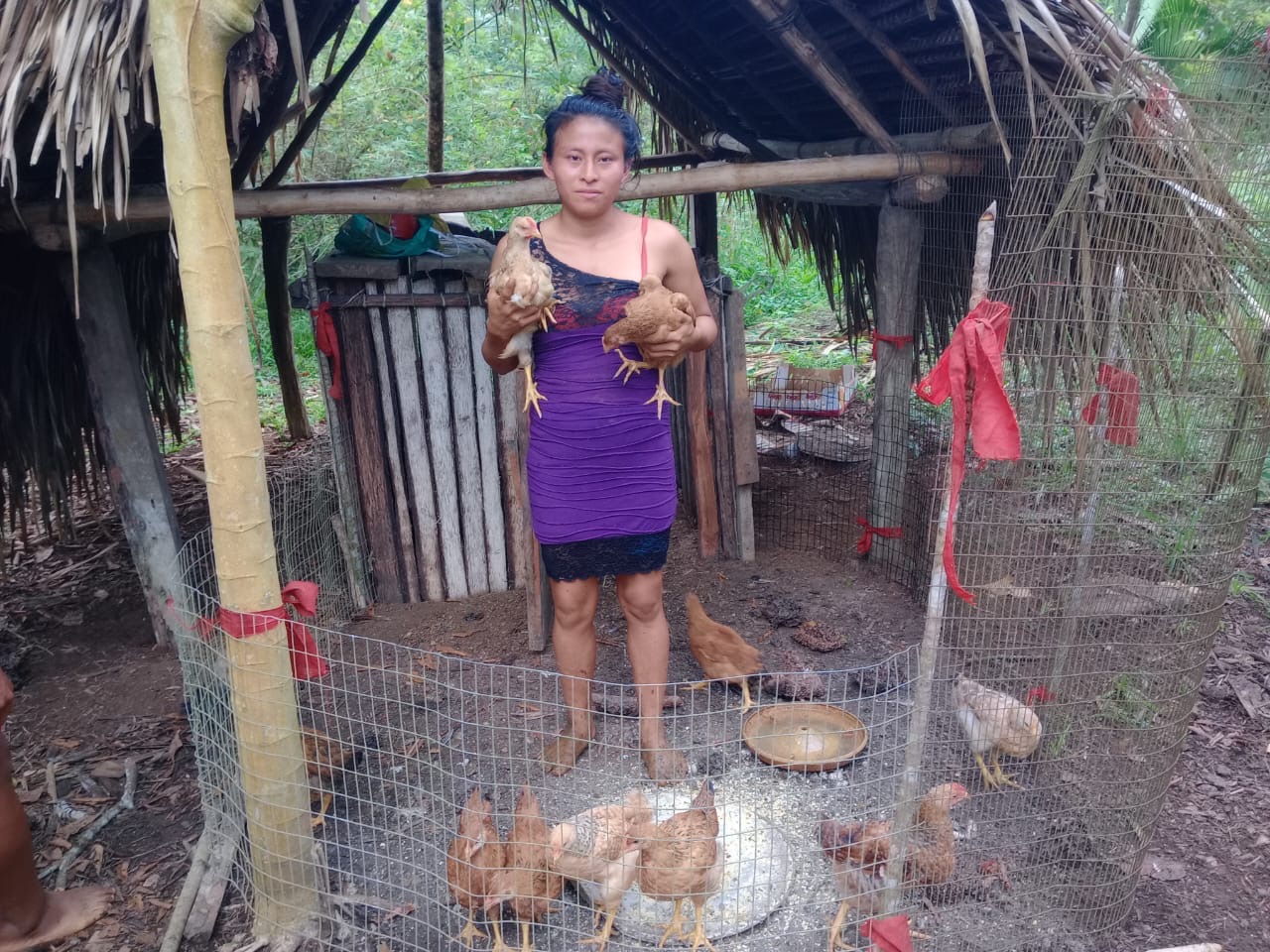
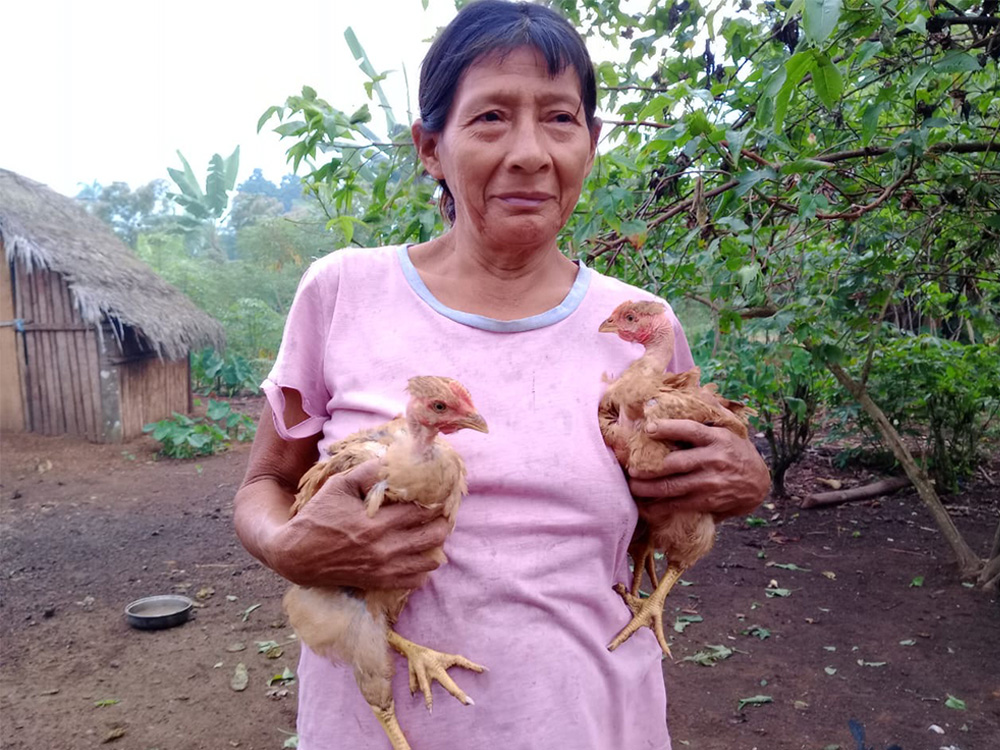
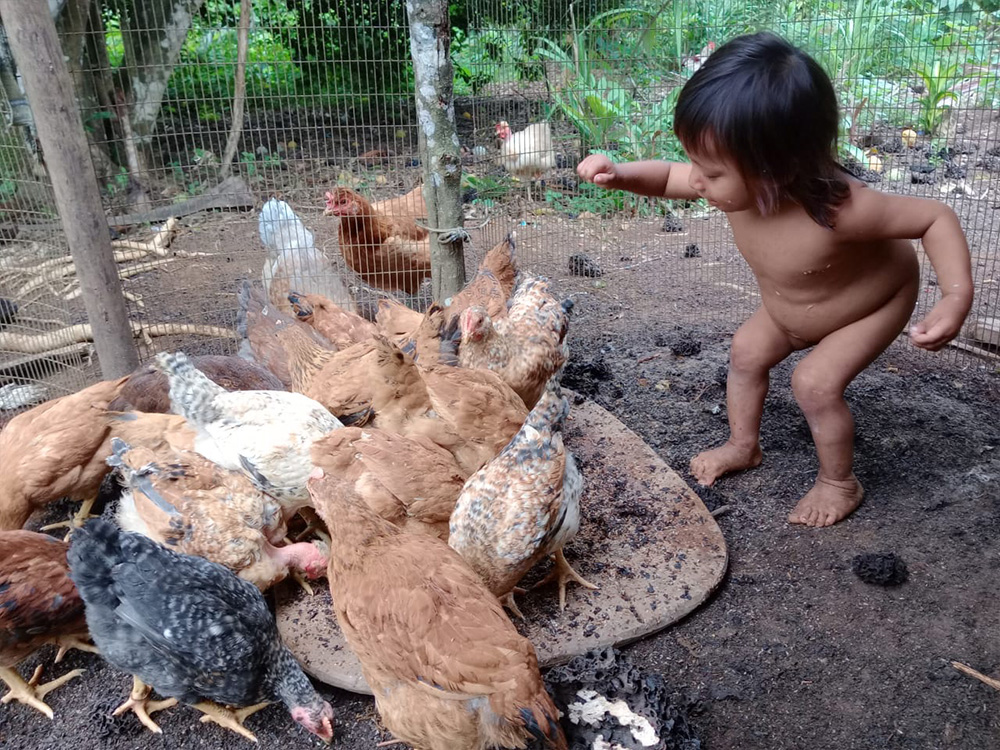
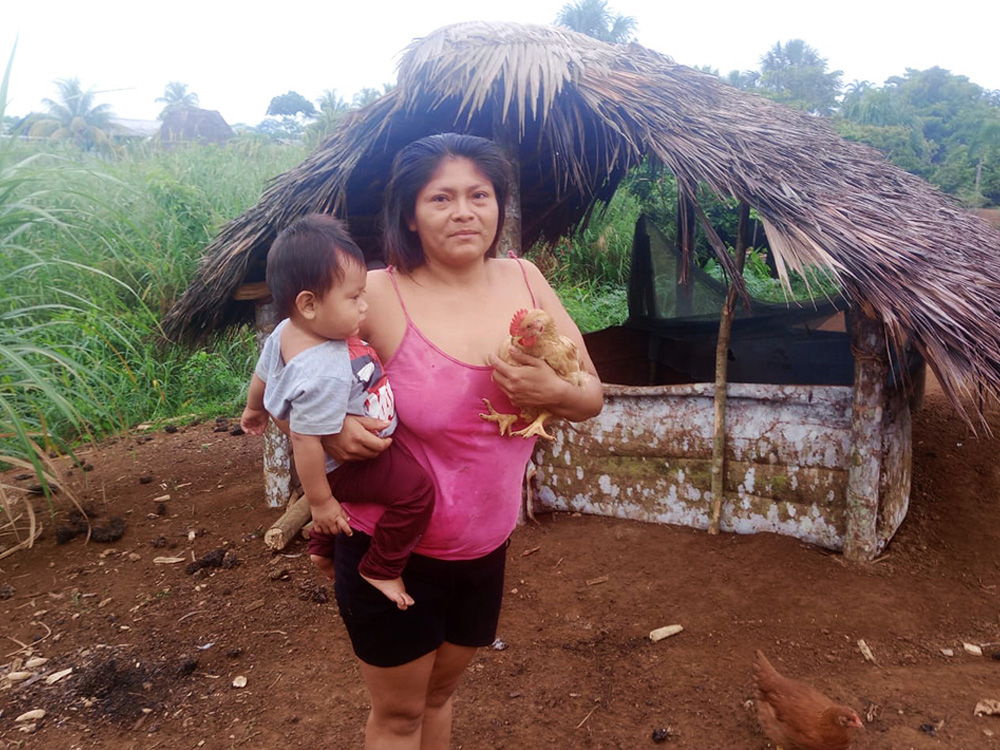
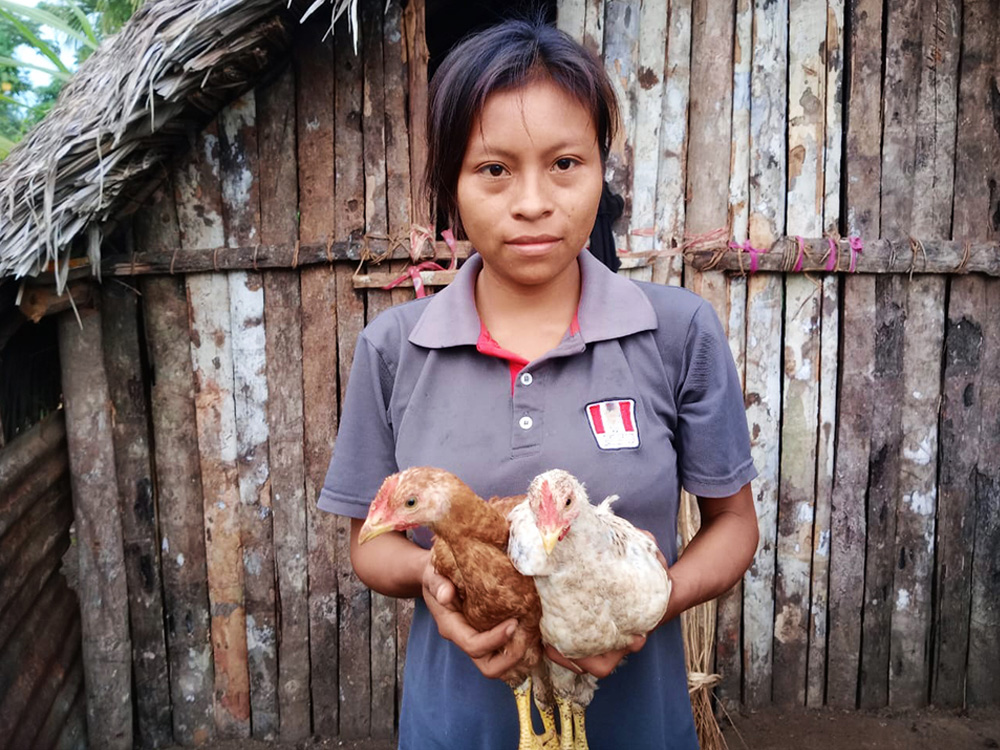
To ensure lasting nutritional benefits, The Waterbearers purchased one thousand two-month-old chicks and distributed them to Achuar families. Local women participated in hands-on training led by a poultry specialist, learning how to care for the birds and support their households.
In many parts of the Amazon, Indigenous communities traditionally keep free-range domesticated chickens that move naturally through the forest and agricultural areas, feeding themselves through scavenging and foraging.
What makes this approach especially sustainable in the Amazon is the ecosystem itself. The rainforest offers abundant natural food for chickens—termites, ants, beetles, grasshoppers, larvae, flies, and other protein-rich insects found in decomposing vegetation and cultivated areas. Thanks to this biodiversity, conventional feed was unnecessary. The chicks quickly adapted and thrived, using the resources already present in their environment.
For families, this meant more than simply raising chickens. It provided easy access to eggs and other protein-rich foods at home, reduced dependence on costly, hard-to-transport products, and created a nutritional buffer for children during crucial growth stages.
Women at the Center
As with many of The Waterbearers’ initiatives, women played a central role in the project’s success. Mothers and caregivers became the primary stewards of the chickens, integrating animal care into daily routines. The training also fostered shared learning among women, strengthening confidence and collective knowledge about nutrition and family well-being.
This approach reflects a larger truth we continue to witness. When women gain tools to support health and nutrition, the benefits ripple across entire families and communities.
The Chicken Project marks a vital shift from emergency nutrition recovery to building community resilience. Supplements save lives in times of crisis, but sustainable well-being requires more: local capacity, culturally appropriate solutions, and systems that communities can maintain themselves.
In Saapapentsa, the goal was not just to treat malnutrition, but to provide clean water for a decade and help create conditions for children to thrive long after the intervention ended. Today, chickens continue to multiply across households, forming part of a greater vision that connects nutrition, women’s leadership, traditional knowledge, and community self-reliance.
For The Waterbearers, lasting impact means more than temporary relief—it’s about building pathways to adaptability alongside the communities we serve.