The Hidden Link Between Water and Malnutrition
By Jane Brinton
I didn’t always understand that water could shape a child’s future.
Working in the Amazon, women don’t talk about “malnutrition”. They talk about tiredness for themselves and their children, who have stomach pain that comes and goes, and diarrhea. They talk about the lack of animals to hunt and the lack of medicines at the community health posts. And why are young children dying?
And almost always, there is water nearby. A river or a stream where children play and collect water several times a day. Water is a big part of their daily life, and water means life. But it doesn’t always mean safety.
That’s the part many people miss.
We are used to thinking about hunger as a lack of food. But what I have seen and learned is that even when food is present, the body cannot use it well if the water is unsafe. A child can eat, and still not absorb nutrients. A mother can prepare meals with care, and still watch her child weaken.
Because the body is fighting something else.
Contaminated water brings invisible battles—parasites, bacteria, infections that don’t always announce themselves loudly, but stay long enough to drain strength, to interrupt growth, to quietly undo the effort of nourishment.
So, the issue is not only what is on the plate, but also in the cup. And more importantly, how often that water is used.
When water is far, they drink less. When rivers are polluted, they wash less, and that invites illness.
But something shifts when water becomes accessible in the home.
I have seen women hold the filter and realize that the shift is now in their hands. When a mother knows that the water she gives her child is safe, something changes in her. There is a kind of quiet confidence and hope that life can get better. She uses more water. She washes more. She prepares food differently. She drinks more herself.
And slowly, the household changes.
Children get sick less often. They recover faster. They have a chance to grow as they should.
This is why at The Waterbearers, we no longer see water as a single intervention.
It is a foundation.
When we talk about solutions, we cannot isolate water from nutrition, or nutrition from hygiene, or hygiene from the role of women.
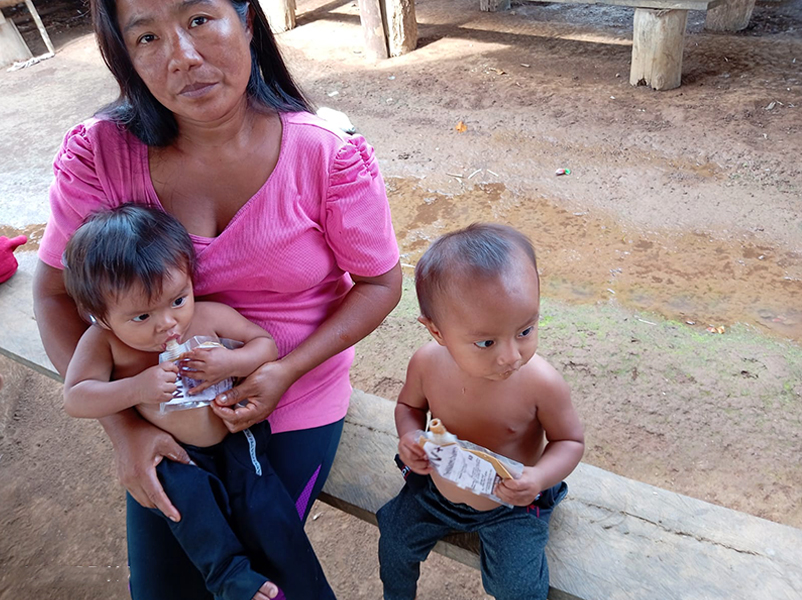
In the Amazonian province of Morona Santiago, 34% of children under five suffer from chronic malnutrition. Alongside the clean water systems we introduce, we have also developed a nutritional supplement made from locally sourced Amazonian ingredients and enriched with multivitamins. This supplement helps protect children from slipping into chronic malnutrition and supports their healthy development.
These are not separate problems. They are one system, living every day inside the home, in the Amazon.
And women are at the center of that system. Not because they should carry the burden—but because they already do.
Jane Brinton is the co-founder and Executive Director of The Waterbearers, that has provided clean water solutions to remote communities worldwide since 2016. Donating to TheWaterbearers can significantly improve women’s and children’s lives in the Ecuadorian rainforest.